Mineral sunscreen has always come with a bit of a tradeoff. You get reliable, broad-spectrum protection (especially important for sensitive skin), but the texture, blending and that lingering white cast haven’t exactly made it something people reach for enthusiastically every single day.
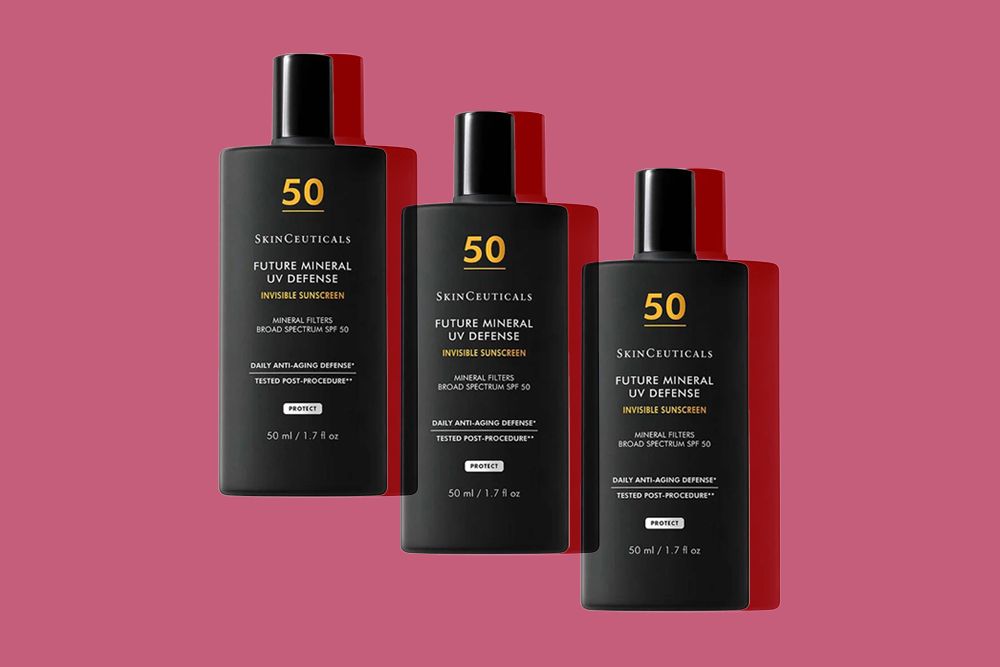
SkinCeuticals is looking to change that with its newest launch, Future Mineral UV Defense SPF 50 ($60), a formula that doesn’t just aim to make mineral sunscreen more wearable but to reposition it entirely. Instead of treating SPF as a final, purely preventative step, this one is designed to function more like skin care—something that actively improves the look of skin over time while protecting it.
At the center of the formula is 15 percent zinc oxide, but not in the way most mineral sunscreens use it. The brand developed a patent-pending emulsion using a new-grade zinc oxide that disperses more evenly across the skin, which is what allows the formula to blend in transparently across all skin tones. That alone addresses one of the most persistent issues with mineral SPF, especially for anyone who has struggled to find a formula that doesn’t leave behind a chalky or gray cast.
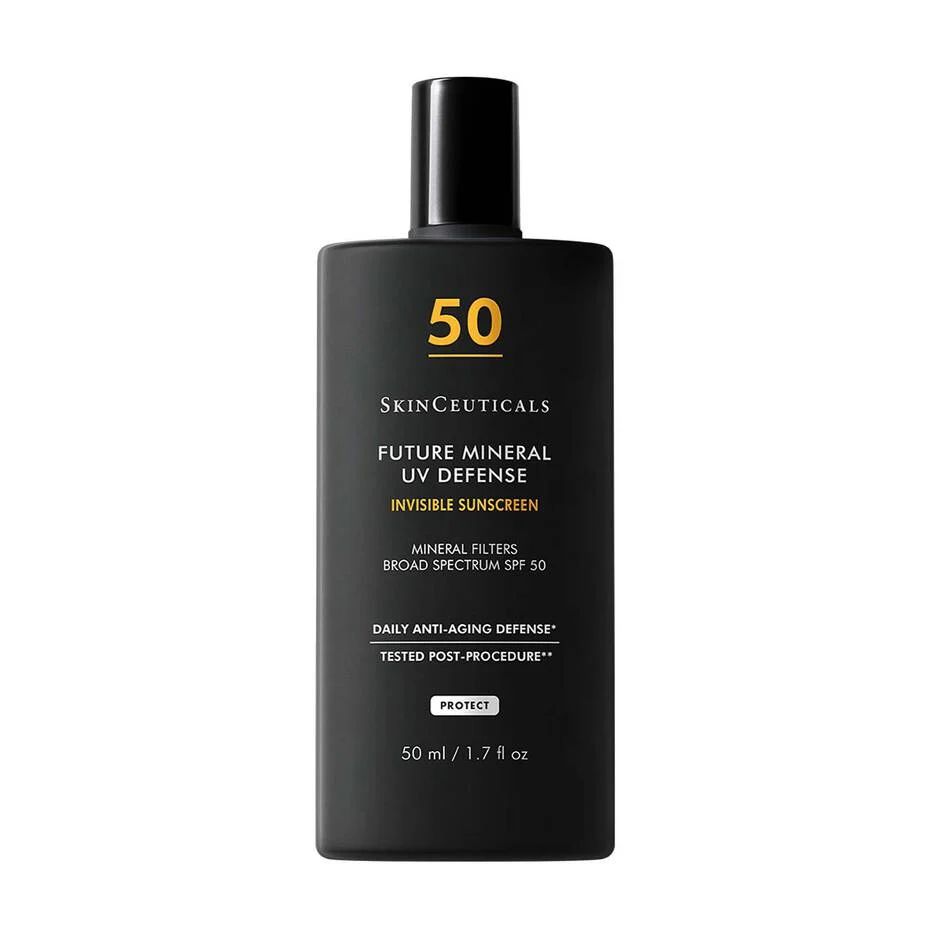
But what makes this launch feel more like a skin-care product than a traditional sunscreen is everything built around that zinc base. The formula is infused with niacinamide and panthenol—ingredients that support the skin barrier, reduce visible redness and help improve overall tone—along with cellulose, which the brand describes as a “bandage-like” active designed to reinforce and protect compromised skin. The overall effect is less about simply shielding the skin from UV damage and more about creating an environment where skin can function better day to day.
That positioning reflects a broader shift happening in the SPF category right now. Sunscreen is no longer just about prevention—it’s increasingly expected to correct, hydrate, smooth and layer seamlessly into a routine without feeling like an afterthought. The best formulas don’t just sit on top of the skin; they integrate into it, working more like a treatment than a barrier.
SkinCeuticals is leaning heavily into that idea with its clinical claims. In brand testing over 12 weeks, users saw a 27 percent reduction in both wrinkles and dark spots, along with a 32 percent decrease in fine lines. While sunscreen has traditionally been framed as something that prevents future damage, these results suggest a growing category of hybrid formulas that also target existing signs of aging.
It also speaks to a larger evolution in mineral sunscreen specifically. While chemical filters have historically had the edge when it comes to cosmetic elegance, advances in formulation—particularly around particle size and dispersion—are starting to close that gap. Newer mineral SPFs are increasingly able to deliver both protection and wearability, without forcing consumers to choose between the two.
At $60, Future Mineral UV Defense SPF 50 sits firmly in the clinical skin care space, but that’s also where expectations are highest. The promise isn’t just that you’ll wear it—it’s that you’ll want to wear it consistently, which is ultimately what makes any sunscreen effective in the first place.
As the line between skin care and sun care continues to blur, launches like this suggest that SPF is no longer just a protective step. It’s becoming one of the most active, treatment-driven parts of a routine—and one that’s finally catching up in both performance and feel.