
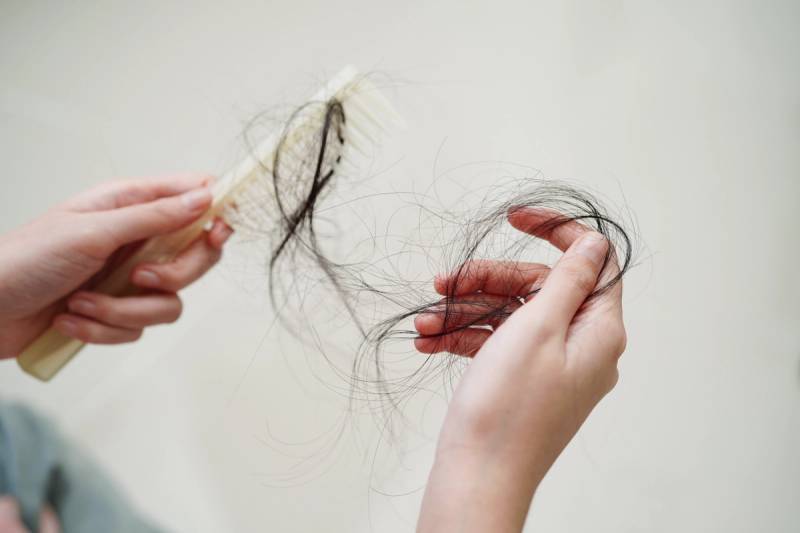
Finding more hair in your brush than usual can be unsettling, but not all hair loss is the same. Alopecia areata is an autoimmune condition in which the immune system attacks the hair follicles, causing hair to fall out, often in round patches on the scalp, though it can also affect the brows, lashes and body. Treatment has changed dramatically in recent years. “It has totally revolutionized the way we face a patient dealing with moderate to severe alopecia areata,” says Phoenix dermatologist Lindsay Ackerman, MD.
Alopecia areata isn’t the same as the gradual thinning many people notice with age or the temporary shedding that can follow stress or illness. Those more common types of hair loss are typically treated with options like minoxidil, which is why getting the right diagnosis matters.
What Does ‘Moderate to Severe’ Alopecia Areata Mean?
Many people assume a diagnosis like this requires losing most of their hair, but Dr. Ackerman says that isn’t the case. “The discretionary use of that term, moderate to severe, doesn’t mean you have to have half or 80 percent of your scalp hair missing,” she explains. “It means it’s meaningful to you. It’s leading to some moderate impairment in quality of life.”
What’s New in Alopecia Areata Treatment?
The biggest advances center on JAK inhibitors, daily pills that calm the immune signals attacking the hair follicles. Three are FDA-approved for severe alopecia areata: Olumiant (baricitinib) and Litfulo (ritlecitinib) for patients 12 and older and Leqselvi (deuruxolitinib) for adults. For milder, patchy cases, dermatologists often start with steroid injections into the affected areas.
According to Dr. Ackerman, the latest updates include “the ongoing evidence for long-term safety with the use of the existing JAK therapies, the expansion of the existing JAK therapeutics to lower ages for use, and as well, we had a new therapeutic come to market.” That newest option, she says, offers “another agent for those who otherwise are naive to therapy or have failed the other two available options.”
How Have JAK Inhibitors Changed Treatment?
Before these targeted therapies, treating alopecia areata meant suppressing the immune system broadly. “We formerly used to have to broadly immunosuppress patients,” says Dr. Ackerman, often with pulse-dose steroids. “Now we’re looking at targeted therapies, which really are a revelation as the way we can approach these patients.”
Like any systemic medication, JAK inhibitors aren’t right for everyone. They carry an FDA boxed warning about risks including serious infections, blood clots and heart problems, require regular monitoring, and hair loss can return if treatment stops, so the decision is one to make with a board-certified dermatologist.
What’s on the Horizon?
Research isn’t slowing down. “We continue to push the envelope in this disease,” says Dr. Ackerman, with the goal of “higher-level outcomes, faster-onset outcomes.” She points to oral therapies already used for other conditions: “We have a lot of evidence basis behind for safety across multiple different disease states that will probably be coming to market for the treatment in alopecia areata as well.”
When Should You See a Dermatologist About Hair Loss?
Some signs are obvious. “Large amounts of hair loss over broad surfaces of the scalp is clearly a reason to go to your dermatologist,” says Dr. Ackerman. Others are subtler, like a thinner ponytail or more hair than usual on the counter or your car seat. “Anything that would take you from what was formerly your ordinary to something that is extraordinary or outside of your norm would be reason to go to a dermatologist.”
If you’re noticing hair loss that feels different from normal shedding, a board-certified dermatologist can determine whether it’s alopecia areata and whether a JAK inhibitor or another treatment may be right for you.
For more expert advice from board-certified doctors, visit the NewBeauty Rx portal.