
Skin care has a language all its own, and sunscreen can feel especially confusing. SPF numbers, physical versus chemical sunscreens, UVA versus UVB rays—there’s a lot to keep straight. But considering sunscreen is one of the most important products in any skin-care routine, understanding the basics matters.
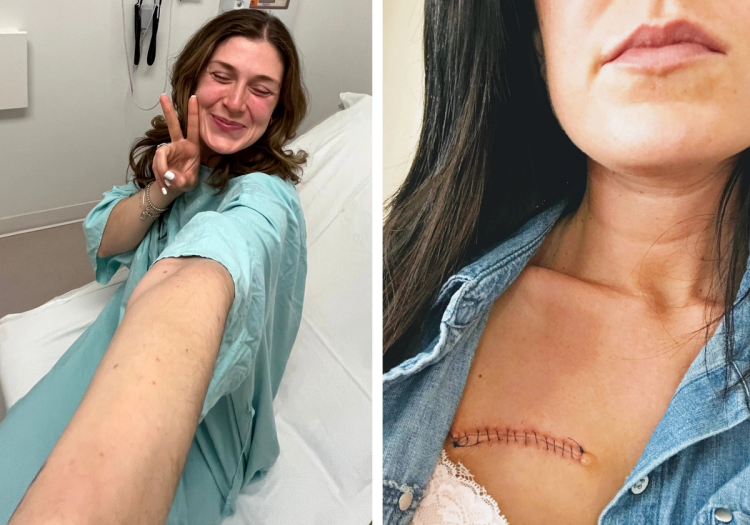
According to 2026 data from the American Academy of Dermatology, skin cancer is the most common form of cancer in the U.S., affecting one in five Americans in their lifetime. One of the easiest ways to help protect against it is by applying a broad-spectrum, water-resistant sunscreen with an SPF of 30 or higher every day.
There’s that phrase again: “broad-spectrum,” which, most simply, “refers to sunscreen that protects against both UVA and UVB rays,” says West Palm Beach, FL dermatologist Jacob Beer, MD. “Traditional sunscreens mostly protect against UVB, which can cause sunburns; however, UVA is also responsible for skin cancers as well as photoaging,” or premature aging caused by sun exposure.
But what exactly separates UVA rays from UVB rays, and why does broad-spectrum protection matter so much? Here’s what to know.
Featured Experts
- Jacob Beer, MD is a board-certified dermatologist in West Palm Beach, FL
- Kristina Collins, MD is a board-certified dermatologist in Austin, TX
- Kseniya Kobets, MD is a board-certified dermatologist in Elmsford, New York
UVA vs. UVB Rays: What’s the Difference?
UVA damage is often less immediately visible than a sunburn, but its long-term effects on the skin can be significant. “UVA tends to penetrate the skin more deeply, so in general we think of UVA as more contributory to photoaging,” explains Dr. Beer. “It affects fibroblasts, which produce collagen and elastin, decreasing the skin’s overall elasticity.”
That’s why UVA exposure is more closely linked to wrinkles, sagging and hyperpigmentation. UVB rays, meanwhile, affect the skin more superficially, which is why they cause sunburns. “UVB causes direct DNA damage,” says Dr. Beer, while UVA causes indirect DNA damage. Crucially, though, “both cause skin cancer,” he adds.
In other words, sunscreen is not just about avoiding an obvious burn. New York dermatologist Kseniya Kobets, MD says it’s also about “daily protection against cumulative DNA damage, hyperpigmentation and accelerated aging” from everyday exposure, whether you’re walking outside, driving or even sitting near a sunny window.
Why Don’t All Sunscreens Offer Broad-Spectrum Protection?
If broad-spectrum sunscreen is considered the gold standard, it’s natural to wonder why every sunscreen on shelves doesn’t automatically offer it. Dr. Beer explains that mineral filters, especially zinc oxide, naturally offer strong coverage against both UVA and UVB rays, while chemical formulas can be trickier.
“With chemical, broad-spectrum sunscreens, few ingredients are FDA-approved to protect against UVA wavelengths,” he explains. “Ingredients that protect against UVA also tend to be less photostable,” meaning some ingredients that protect against UVA rays can lose effectiveness when exposed to sunlight.
This is also why SPF alone can be misleading. “SPF specifically measures protection against UVB rays, not UVA rays, so a sunscreen can have a high SPF while still offering inadequate UVA coverage if it is not labeled broad-spectrum,” says Austin, TX dermatologist Kristina Collins, MD.
That means a higher SPF number does not mean you can apply less or reapply less often. “No sunscreen blocks 100-percent of UV radiation,” says Dr. Kobets. “Even high SPF products still need to be applied generously and reapplied every two hours, especially with sweating or outdoor activity.”
What to Look for in a Broad-Spectrum Sunscreen
For Dr. Beer, mineral sunscreens are often a good place to start. He tends to recommend formulas containing zinc oxide and titanium dioxide, ingredients that can help provide broad UVA and UVB protection.
Dr. Kobets adds that SPF 30 blocks about 97 percent of UVB rays, while SPF 50 blocks about 98 percent. “The difference sounds small, but for patients with melasma, hyperpigmentation, rosacea, lupus or very sun-sensitive skin, that extra protection can still matter,” she says.
For those prone to melasma or post-inflammatory hyperpigmentation, tinted mineral sunscreens can be especially helpful. Dr. Collins recommends formulas with iron oxides, which provide additional protection against visible light—the part of sunlight we can see, as opposed to invisible UVA and UVB rays. While visible light does not cause sunburn the way UVB rays do, it can worsen certain pigmentation concerns.
Ultimately, the best sunscreen is the one you’ll actually wear consistently. Look for a formula that fits your skin type and daily routine, whether that’s a lightweight fluid, a hydrating lotion or a tinted mineral formula.
Dr. Kobets also reminds patients that sunscreen works best as part of a broader sun-protection strategy, including reapplying when outdoors, wearing hats, sunglasses and UPF clothing, seeking shade and covering commonly missed areas such as the ears, neck, chest and backs of the hands.
The Best Broad-Spectrum Sunscreens to Try